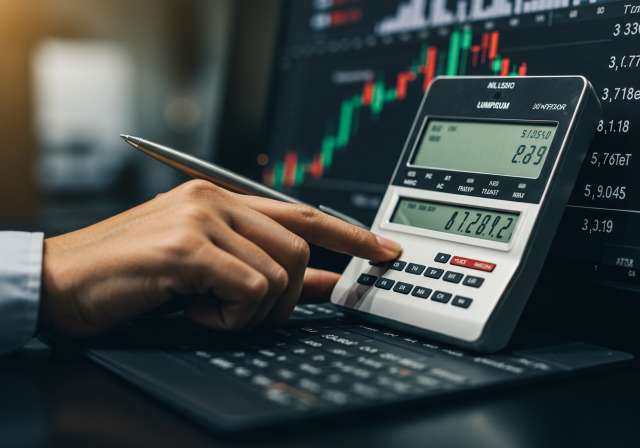
Unlock the potential of the Indian stock market! This guide dives deep into BSE trading, covering everything from account setup to smart investment strategies,
Unlock the potential of the Indian stock market! This guide dives deep into BSE trading, covering everything from account setup to smart investment strategies, empowering you to make informed decisions and grow your wealth.
Mastering BSE Trading: A Comprehensive Guide for Indian Investors
Introduction: Navigating the Indian Stock Market with the BSE
The Bombay Stock Exchange (BSE), Asia’s oldest stock exchange, stands as a cornerstone of the Indian financial landscape. For generations, it has facilitated wealth creation, connecting businesses with investors and fueling the nation’s economic growth. Understanding the intricacies of the BSE is crucial for any Indian investor, whether a seasoned market participant or a newcomer eager to explore the opportunities within the equity markets.
This comprehensive guide aims to demystify the world of BSE trading, providing you with the knowledge and tools necessary to navigate this dynamic market with confidence. We will explore everything from the fundamentals of stock market participation to advanced investment strategies, enabling you to make informed decisions and achieve your financial goals.
Getting Started: Opening Your Gateway to BSE Trading
Before you can embark on your BSE trading journey, you’ll need to establish a trading and Demat account. This essentially creates your digital gateway to the stock market.
Choosing the Right Broker: A Crucial First Step
Selecting the right brokerage firm is paramount. Several factors should influence your decision:
- Brokerage Fees: Compare brokerage charges across different platforms. Discount brokers generally offer lower fees, while full-service brokers provide additional research and advisory services.
- Trading Platform: Opt for a user-friendly platform that offers real-time market data, charting tools, and order execution capabilities. Many brokers provide mobile apps for trading on the go.
- Research & Advisory Services: If you’re new to the market or prefer expert guidance, consider a broker that offers in-depth research reports and personalized investment advice.
- Account Opening Process: Ensure the account opening process is streamlined and hassle-free. Many brokers now offer online account opening facilities.
- Customer Support: Assess the quality of customer support provided by the broker. Look for responsiveness, accessibility, and knowledgeable support staff.
The Demat Account: Holding Your Securities Electronically
A Demat (Dematerialization) account holds your shares and other securities in electronic form. This eliminates the need for physical share certificates, streamlining the trading process.
Your broker will typically facilitate the opening of both your trading and Demat accounts simultaneously. You’ll need to provide KYC (Know Your Customer) documents such as:
- Proof of Identity (e.g., Aadhaar card, PAN card, Passport)
- Proof of Address (e.g., Aadhaar card, Utility bill, Bank statement)
- PAN Card (mandatory for trading in securities)
- Bank Account Details (for fund transfers)
Understanding the Basics: Key Concepts for BSE Trading
Before diving into trading, it’s essential to grasp the fundamental concepts that govern the stock market:
Equity Shares: Owning a Piece of the Pie
Equity shares represent ownership in a company. When you buy shares of a company listed on the BSE, you become a shareholder, entitled to a portion of the company’s profits (dividends) and a vote in certain company decisions.
Market Indices: Measuring Market Performance
The BSE Sensex is the benchmark index of the Bombay Stock Exchange. It reflects the performance of the 30 largest and most actively traded companies listed on the BSE. Tracking the Sensex can provide a general overview of market sentiment and trends. The Nifty 50 on the NSE is another key index to watch. These indices are vital barometers for the Indian equity market.
Initial Public Offerings (IPOs): Entering the Market
An IPO is the first time a private company offers shares to the public. Investing in IPOs can be lucrative, but it also carries risk. Thorough research is crucial before investing in an IPO. Assess the company’s fundamentals, growth prospects, and the overall market conditions.
Order Types: Placing Your Bets
Understanding different order types is crucial for executing your trades effectively:
- Market Order: An order to buy or sell a stock at the current market price. This ensures quick execution but may not guarantee the desired price.
- Limit Order: An order to buy or sell a stock at a specific price or better. This allows you to control the price at which you trade but may not guarantee execution if the market doesn’t reach your desired price.
- Stop-Loss Order: An order to sell a stock when it reaches a specific price. This helps to limit potential losses if the stock price declines.
Developing Your Investment Strategy: A Roadmap to Success
A well-defined investment strategy is essential for achieving your financial goals. Consider your risk tolerance, investment horizon, and financial objectives when formulating your strategy.
Fundamental Analysis: Digging Deeper into Companies
Fundamental analysis involves evaluating a company’s financial health and growth prospects to determine its intrinsic value. This involves analyzing financial statements (balance sheet, income statement, cash flow statement), industry trends, and the company’s competitive position.
Key ratios to consider include:
- Price-to-Earnings (P/E) Ratio: Measures the company’s stock price relative to its earnings per share.
- Debt-to-Equity Ratio: Indicates the company’s leverage.
- Return on Equity (ROE): Measures the company’s profitability relative to shareholder equity.
Technical Analysis: Reading the Charts
Technical analysis involves studying historical price and volume data to identify patterns and predict future price movements. This involves using charts, indicators, and other technical tools.
Popular technical indicators include:
- Moving Averages: Smooth out price fluctuations and identify trends.
- Relative Strength Index (RSI): Measures the magnitude of recent price changes to evaluate overbought or oversold conditions.
- MACD (Moving Average Convergence Divergence): Identifies changes in the strength, direction, momentum, and duration of a trend in a stock’s price.
Diversification: Spreading Your Risk
Diversification is a crucial risk management technique. Avoid putting all your eggs in one basket. Spread your investments across different sectors, asset classes, and geographies. This helps to mitigate losses if one particular investment performs poorly.
Long-Term Investing: The Power of Compounding
Long-term investing allows you to benefit from the power of compounding. Invest in fundamentally strong companies with good growth prospects and hold them for the long term. This allows your investments to grow exponentially over time.
Beyond Stocks: Exploring Other Investment Avenues on the BSE
The BSE offers a range of investment opportunities beyond just equity shares. These include:
Mutual Funds: Professional Money Management
Mutual funds pool money from multiple investors to invest in a diversified portfolio of stocks, bonds, or other assets. They are managed by professional fund managers and offer a convenient way to diversify your investments.
Types of mutual funds include:
- Equity Funds: Invest primarily in stocks.
- Debt Funds: Invest primarily in bonds.
- Hybrid Funds: Invest in a combination of stocks and bonds.
- ELSS Funds: Equity Linked Savings Schemes offer tax benefits under Section 80C of the Income Tax Act.
Exchange Traded Funds (ETFs): Combining the Best of Both Worlds
ETFs are similar to mutual funds but are traded on stock exchanges like individual stocks. They typically track a specific market index or sector, offering a cost-effective way to gain exposure to a diversified portfolio.
Sovereign Gold Bonds (SGBs): Investing in Gold Digitally
SGBs are government securities denominated in grams of gold. They offer a safe and convenient way to invest in gold without the need for physical storage. They also pay a fixed interest rate, providing an additional source of income.
Tax Implications of BSE Trading: Understanding Your Liabilities
Profits from BSE trading are subject to capital gains tax. The tax rate depends on the holding period of the investment:
- Short-Term Capital Gains (STCG): Gains from investments held for less than 12 months are taxed at 15%.
- Long-Term Capital Gains (LTCG): Gains from investments held for more than 12 months are taxed at 10% (above ₹1 lakh).
It’s crucial to maintain accurate records of your transactions and consult with a tax advisor to understand your tax liabilities and optimize your tax planning.
Risk Management: Protecting Your Investments
Investing in the stock market involves inherent risks. It’s essential to implement effective risk management strategies to protect your capital.
- Set Stop-Loss Orders: To limit potential losses.
- Diversify Your Portfolio: To reduce the impact of any single investment on your overall portfolio.
- Invest Gradually: Use Systematic Investment Plans (SIPs) to invest a fixed amount regularly, averaging out the cost of your investments.
- Avoid Over-Leveraging: Don’t borrow excessively to invest in the stock market.
- Stay Informed: Keep abreast of market news and developments.
Conclusion: Empowering Your Financial Future Through BSE Trading
BSE trading offers a multitude of opportunities for Indian investors to grow their wealth and achieve their financial goals. However, success requires a combination of knowledge, discipline, and a well-defined investment strategy. By understanding the fundamentals of the market, conducting thorough research, managing your risk effectively, and staying informed, you can navigate the BSE with confidence and unlock the potential for long-term financial success. Remember to also explore government-backed schemes like Public Provident Fund (PPF) and National Pension System (NPS) for long-term financial planning and tax benefits.
Leave a Reply