Want to start day trading? Open a demat account for daily trading! Learn about the best demat accounts, brokerage charges, tools & strategies for successful tra
Want to start day trading? Open a demat account for daily trading! Learn about the best demat accounts, brokerage charges, tools & strategies for successful trading in India.
Demat Account for Daily Trading: A Comprehensive Guide for Indian Traders
Introduction: Diving into the World of Daily Trading
The Indian stock market, with its dynamic ups and downs, offers a plethora of opportunities for those seeking quick returns. Daily trading, also known as intraday trading, involves buying and selling stocks within the same trading day, aiming to profit from small price fluctuations. While the potential rewards can be significant, it’s crucial to understand the risks involved and equip yourself with the right tools and knowledge. A fundamental component of this journey is having the right demat account.
In India, the Securities and Exchange Board of India (SEBI) regulates the stock market, ensuring fair practices and investor protection. Understanding SEBI’s guidelines and regulations is paramount for any aspiring day trader.
What is a Demat Account and Why is it Essential for Daily Trading?
A demat account, short for Dematerialization Account, is an electronic repository where your shares and other securities are held in dematerialized form. Think of it as a digital locker for your investments. It eliminates the need for physical share certificates, making trading faster, more convenient, and more secure.
For daily trading, a demat account is absolutely essential. It allows you to seamlessly buy and sell shares throughout the day without the hassle of physical paperwork. The speed and efficiency offered by a demat account are critical for capitalizing on short-term market movements. Furthermore, linking your demat account to a trading account facilitates quick order execution, which is crucial for capturing fleeting opportunities in the intraday market.
Choosing the Right Demat Account for Daily Trading in India
Selecting the right demat account is a critical step in your daily trading journey. Here are some key factors to consider:
1. Brokerage Charges
Brokerage charges are the fees levied by your broker for executing trades. For daily traders who make numerous trades, these charges can significantly impact profitability. There are typically two types of brokerage plans:
- Percentage-Based Brokerage: The broker charges a percentage of the transaction value. This is often less suitable for daily trading as costs can quickly escalate with higher trading volumes.
- Flat-Fee Brokerage: The broker charges a fixed fee per trade, regardless of the transaction value. This is generally preferred by daily traders as it offers cost predictability and can be more economical for high-volume trading. Many brokers offer flat-fee plans as low as ₹20 per trade.
When comparing brokerage plans, consider your trading volume and frequency to determine which option is most cost-effective. Don’t just look at the headline rate; also factor in other charges like DP charges (Depository Participant charges) levied by the depository (NSDL or CDSL) for debiting securities from your demat account when you sell shares.
2. Trading Platform and Tools
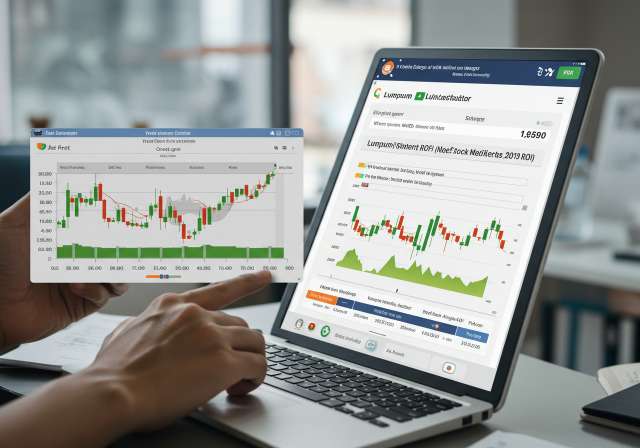
The trading platform provided by your broker is your window to the market. Look for a platform that is user-friendly, reliable, and offers advanced charting tools, real-time market data, and order execution capabilities. A robust trading platform can significantly enhance your trading experience and improve your decision-making.
Key features to look for in a trading platform include:
- Real-time Market Data: Accurate and up-to-date information on price movements, order book depth, and trading volumes.
- Advanced Charting Tools: Technical indicators, drawing tools, and customizable chart layouts for analyzing price trends and patterns.
- Order Types: Support for various order types, such as market orders, limit orders, stop-loss orders, and bracket orders, to manage risk and automate trading strategies.
- Mobile App: A mobile app that allows you to trade on the go and monitor your positions from anywhere.
3. Research and Advisory Services
While daily trading relies heavily on technical analysis, having access to research reports and advisory services can be beneficial. Some brokers provide research reports, stock recommendations, and market insights that can help you identify potential trading opportunities. However, remember to conduct your own due diligence and not solely rely on external recommendations.
4. Customer Support
Reliable customer support is crucial, especially when you’re dealing with time-sensitive trades. Choose a broker that offers prompt and efficient customer service through multiple channels, such as phone, email, and chat. Having access to quick support can help you resolve issues quickly and minimize potential losses.
5. Account Opening Process and Requirements
The account opening process should be seamless and straightforward. Most brokers offer online account opening, which requires you to submit KYC (Know Your Customer) documents, such as your PAN card, Aadhaar card, and bank statement. Ensure that the broker has a hassle-free account opening process and clear documentation requirements.
Popular Demat Account Providers in India for Daily Trading
Several reputable brokers in India offer demat accounts suitable for daily trading. Some popular options include:
- Zerodha: Known for its low brokerage fees and user-friendly platform.
- Upstox: Another popular discount broker offering competitive pricing and advanced trading tools.
- Angel Broking: A full-service broker offering research and advisory services along with brokerage services.
- Groww: A user-friendly platform popular among beginner investors, offering both stocks and mutual funds.
- ICICI Direct: A full-service broker from ICICI Securities, offering a wide range of investment products and services.
Compare the features, brokerage charges, and platform offerings of different brokers before making a decision.
Strategies and Tips for Successful Daily Trading with a Demat Account
Having a demat account is just the first step. Successful daily trading requires a well-defined strategy, disciplined risk management, and continuous learning.
1. Develop a Trading Plan
A trading plan is your roadmap for navigating the market. It should outline your trading goals, risk tolerance, entry and exit strategies, and money management rules. A well-defined trading plan helps you stay disciplined and avoid emotional decisions.
2. Master Technical Analysis
Technical analysis is the art of studying price charts and using technical indicators to identify potential trading opportunities. Learn about different chart patterns, candlestick patterns, and technical indicators, such as moving averages, MACD, and RSI. Technical analysis can help you predict future price movements and make informed trading decisions.
3. Practice Risk Management
Risk management is crucial for preserving your capital and minimizing losses. Use stop-loss orders to limit your potential losses on each trade. Never risk more than a small percentage of your trading capital on a single trade (e.g., 1-2%). Diversify your trades across different stocks or sectors to reduce overall risk. A crucial aspect of successful risk management is understanding and using instruments like futures and options, but only once you are thoroughly familiar with their mechanics and risks. Avoid trading solely based on tips; conduct your own research.
4. Stay Informed about Market News
Keep abreast of market news and events that could impact stock prices. Follow economic indicators, company announcements, and global events. Being aware of market news can help you anticipate potential price movements and adjust your trading strategy accordingly.
5. Start Small and Scale Gradually
Begin with a small amount of capital and gradually increase your trading size as you gain experience and confidence. Avoid risking large amounts of money in the beginning until you have a proven trading strategy. Consider paper trading or simulated trading to practice your strategies before risking real money.
6. Control Your Emotions
Emotions can be your worst enemy in the stock market. Avoid letting fear or greed influence your trading decisions. Stick to your trading plan and avoid impulsive reactions to market fluctuations. Maintain a calm and rational mindset, even during periods of high volatility. Remember the long game – short-term losses are inevitable, but consistent, disciplined trading will yield the best results.
7. Continuous Learning
The stock market is constantly evolving, so it’s essential to keep learning and adapting. Read books, attend webinars, and follow reputable financial news sources. Continuously refine your trading skills and knowledge to stay ahead of the curve.
Demat Account for Daily Trading: Final Thoughts
A demat account is an indispensable tool for daily trading in India. Choosing the right demat account, developing a robust trading strategy, and practicing disciplined risk management are essential for success. Remember that daily trading involves significant risk, and it’s crucial to approach it with caution and a long-term perspective. By understanding the market dynamics, mastering technical analysis, and controlling your emotions, you can increase your chances of achieving your financial goals through daily trading. Explore various investment options like mutual funds (including SIPs and ELSS for tax saving), PPF, and NPS to diversify your portfolio and achieve long-term financial security. Investing in equity markets through a demat account opens doors to potential high returns, but always balance it with safer investment avenues.